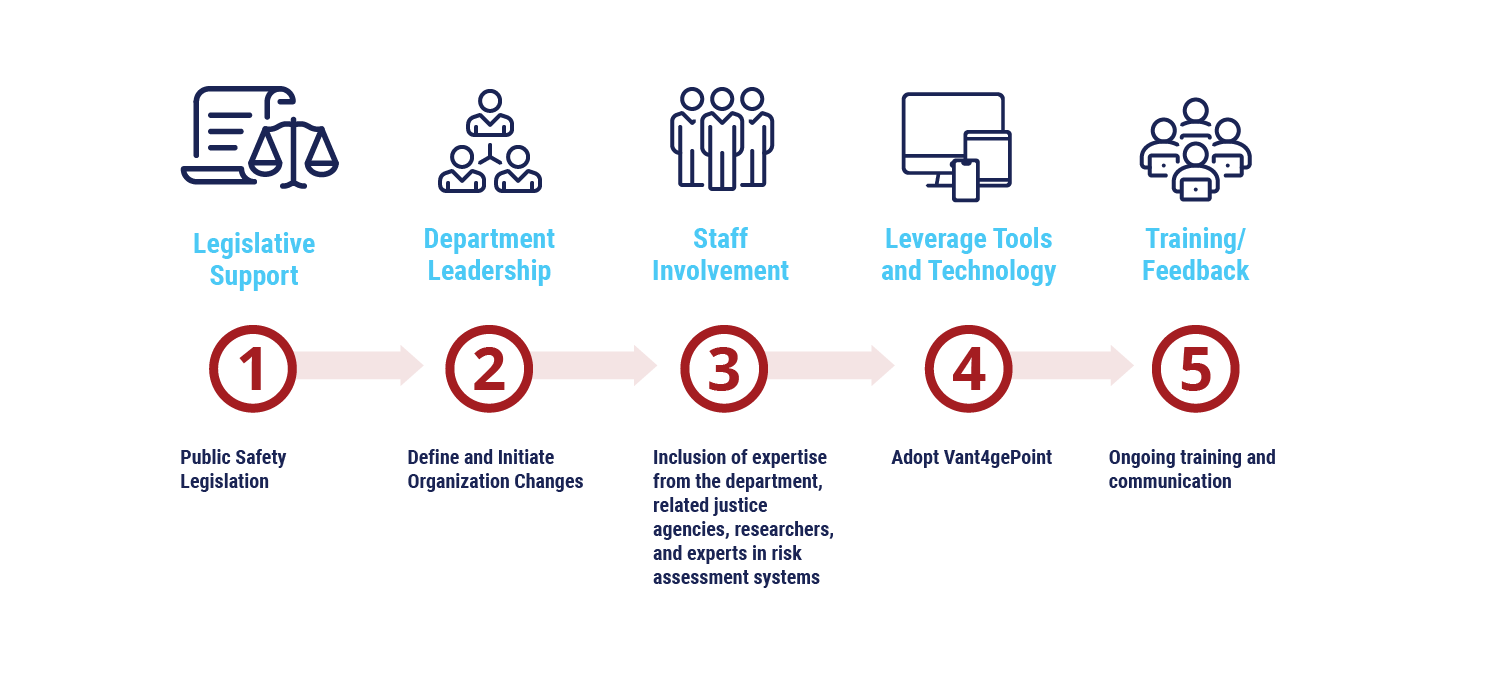
Seamless Supervision Implementation
The implementation process of a comprehensive risk and needs assessment system can be customized to fit any jurisdiction. The key to success lies in focusing on collaboration, thorough planning, and continuous quality assurance. These elements are pivotal in achieving long-term success. The process begins with agency administration recognizing the need for an evidence-based system to enhance decision-making and improve outcomes. To achieve the most comprehensive results and harness the full power of the assessment tool, it should be applied across all key stages of the criminal justice system, including sentencing, program and treatment services, parole decisions, and community supervision.
Success in Leadership
Successful implementation requires active involvement of leadership. These leaders play a pivotal role in championing the initiative and fostering a culture of collaboration across divisions and with stakeholders. Change is far more successful when staff are intrinsically motivated and empowered to actively participate in the initiative, giving them voice in the process. As such, Vant4ge’s use of a Vant4gePoint Implementation Team model is grounded in the engagement of a wide range of staff from varying job functions and roles within the organization. The process includes forming action teams, comprised of subject matter experts and identifying the steering committee generally composed of agency executives, justice partners, and subject matter experts. These teams work together over an extended period to plan, inform, develop, and roll out the initiative, ensuring that all aspects of the new system cover the agency’s needs, from technology and training to quality assurance and staff engagement.
Everything Begins with the Tool
The implementation process begins with selecting a highly predictive assessment tool customized to the jurisdiction’s specific needs. This tool should centralize data, enhance efficiency, and support informed decision-making. Equally important are the subsequent steps: ensuring the accuracy of criminal records for automation, integrating inter- and intra-item logic within the assessment to boost accuracy and reduce staff completion time, and using the assessment results to inform other case management decisions automatically. Additionally, clear communication, comprehensive staff training, and ongoing quality assurance are essential. Together, these efforts aim to improve public safety, reduce recidivism, and optimize resource allocation by grounding decisions in reliable data and best practices.
Sound Decisions for the Future Begin Today
Ultimately, our implementation process emphasizes the importance of stakeholder buy-in, continuous improvement, and adaptability to meet the evolving needs of any agency. By following a structured and collaborative approach to implementation, agencies effectively enhance their supervision practices and achieve measurable improvements in outcomes that are long-lasting. This approach not only strengthens the agency’s capabilities but also builds a resilient system that can adapt to future challenges and opportunities.
“Change is far more successful when staff are intrinsically motivated and empowered to actively participate in the initiative”